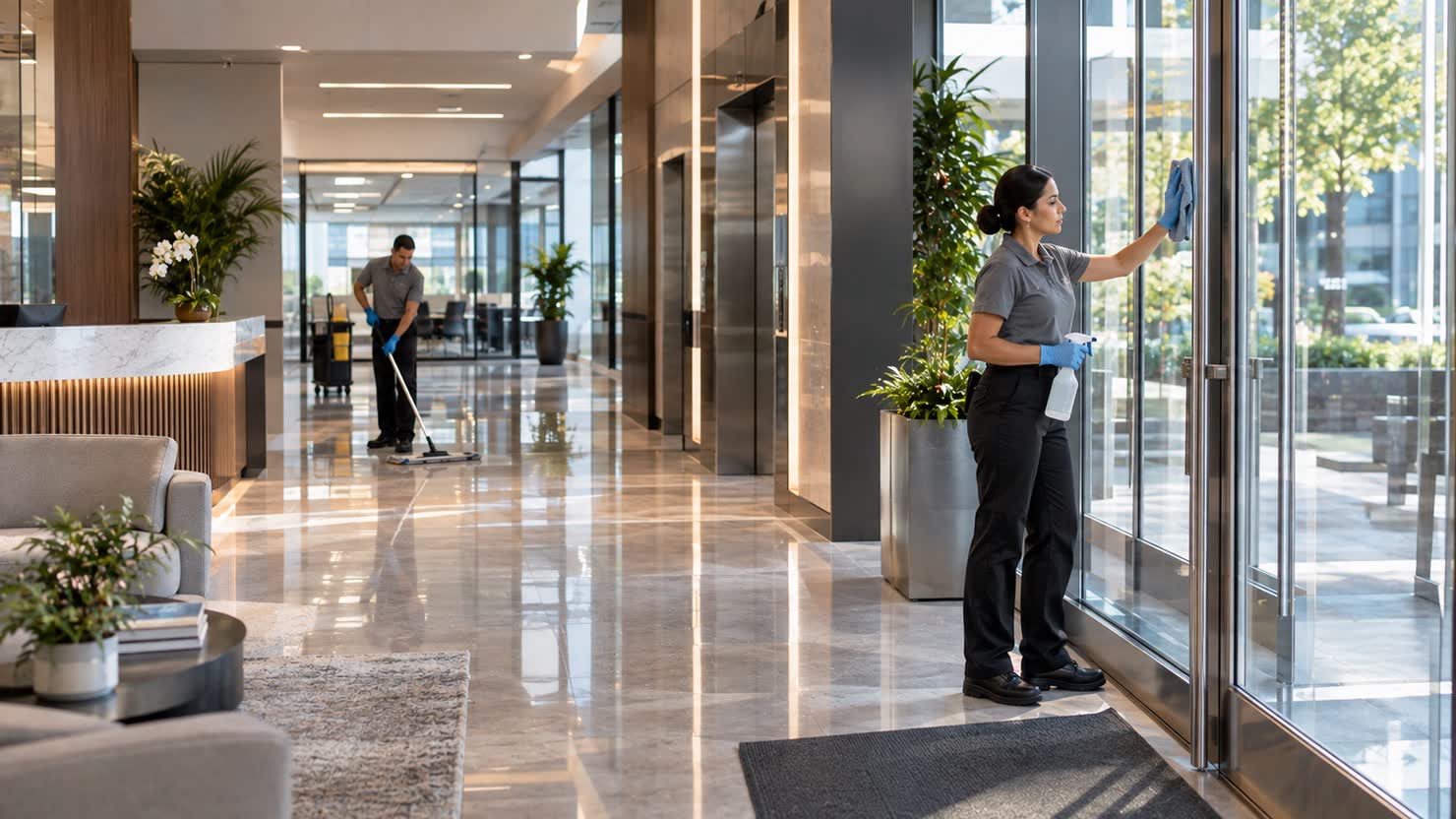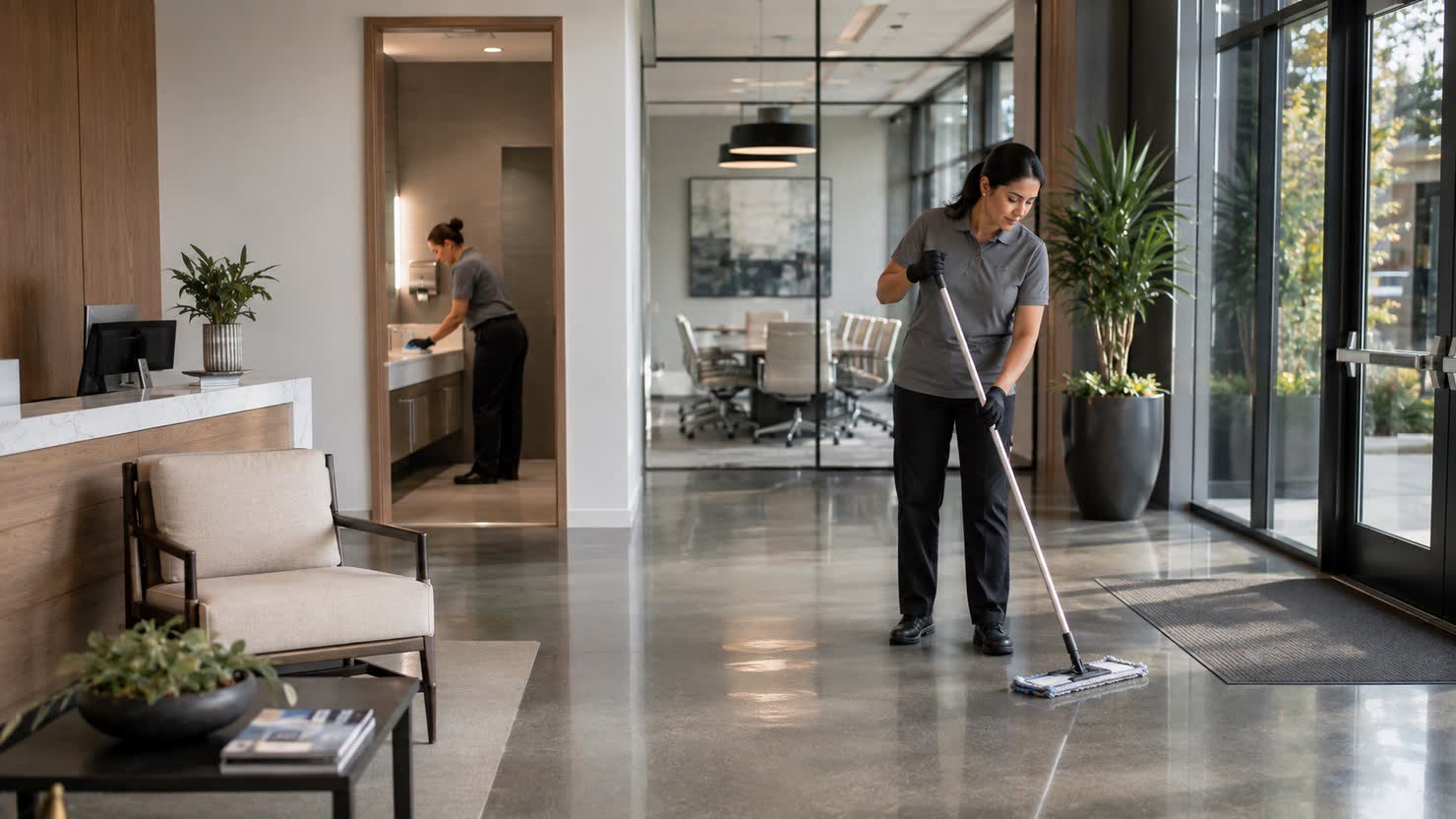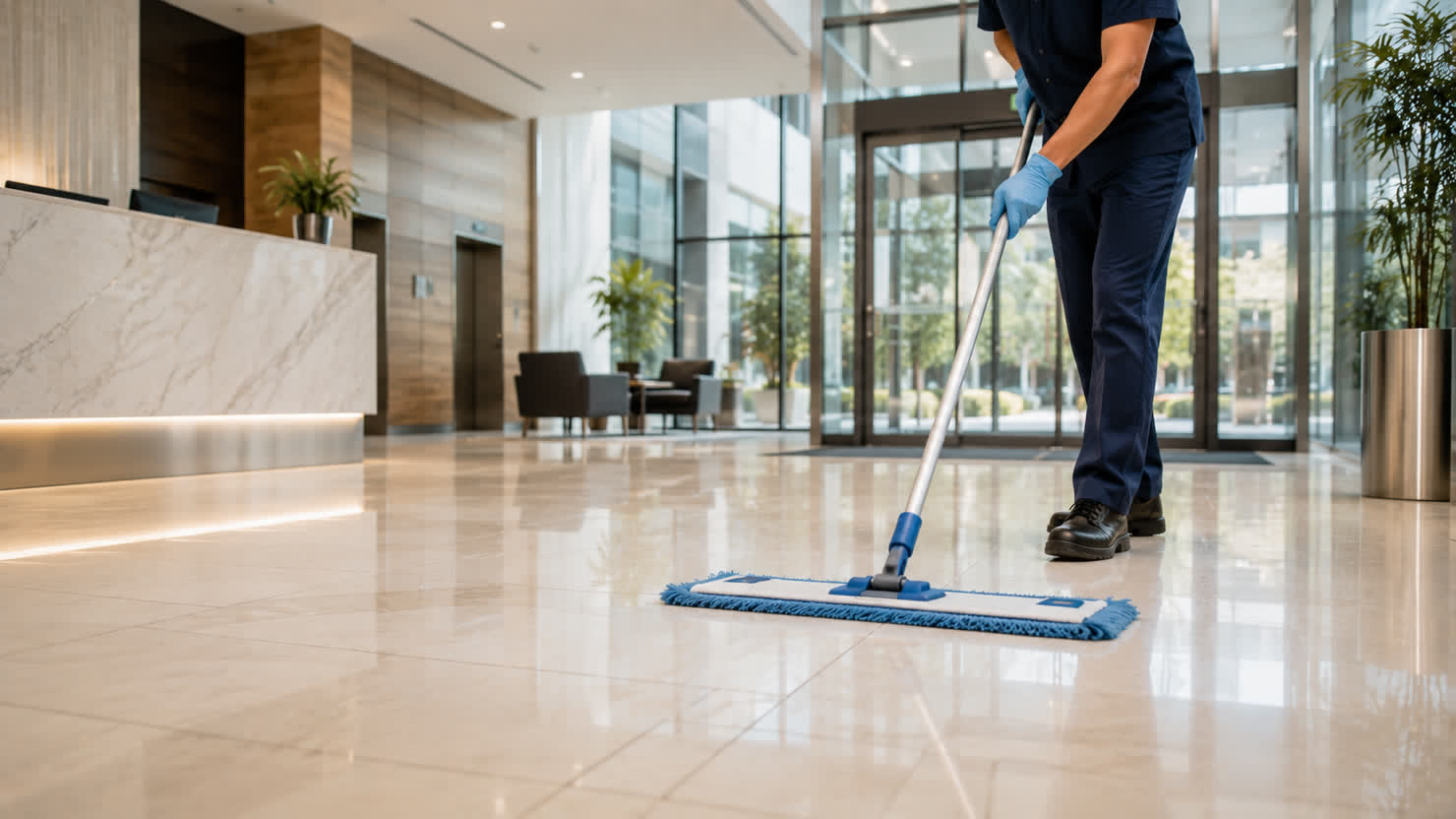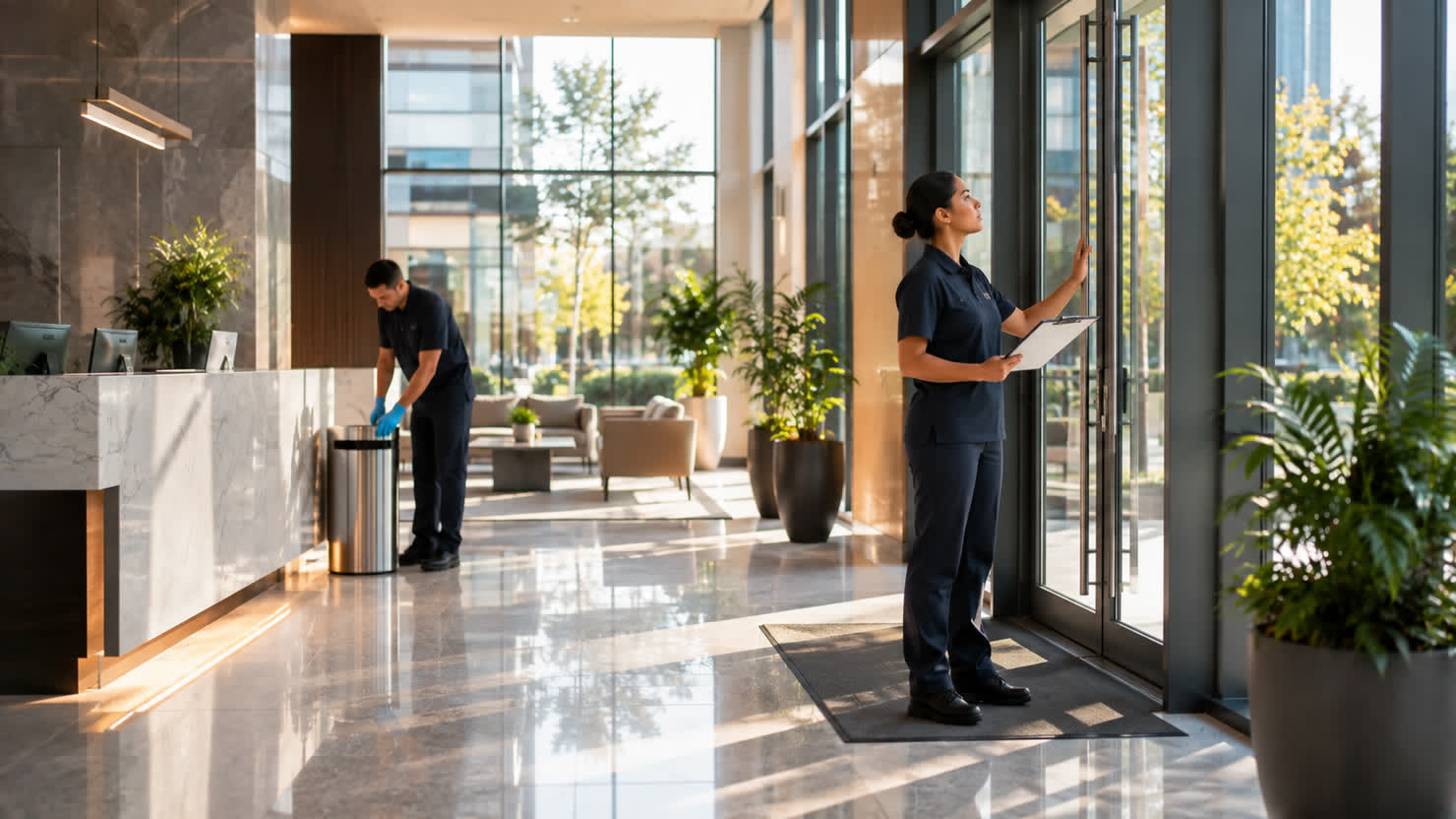
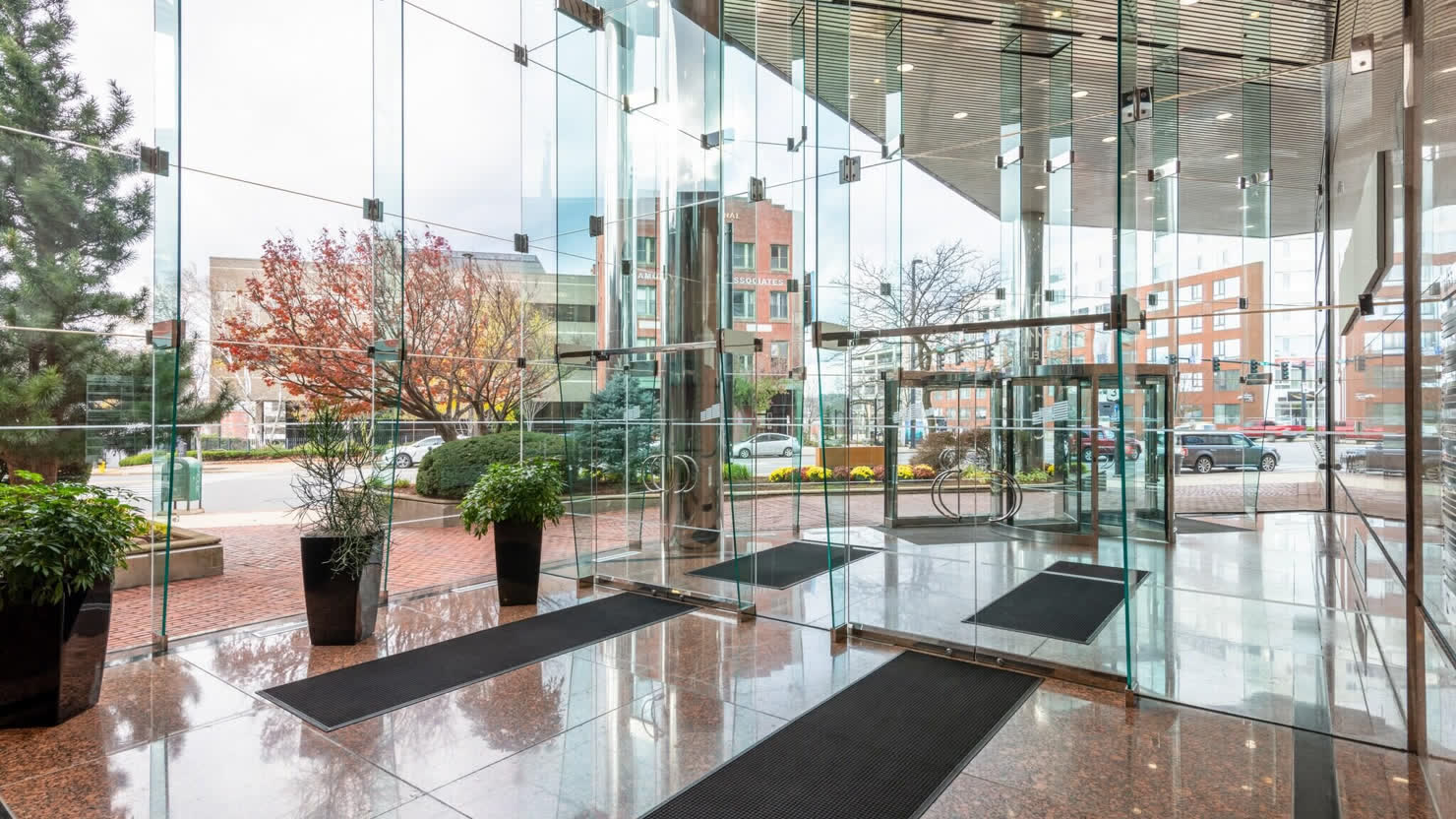
When the rain returns to Southwest Washington and the Portland area, the entrance to a commercial building takes on a new job. It becomes the first place to collect water, grit, leaves, and whatever else gets carried in from the parking lot and sidewalks.
That creates a challenge for facility managers. An entrance can look clean at the end of a janitorial visit and appear dirty again after a busy morning. Moisture can also travel beyond the lobby, reaching elevator thresholds, hallways, and other walking surfaces.
A better rainy-season cleaning approach starts by understanding where the mess enters, where it travels, and which areas need the most attention.
1. Start With the Entrance, Not the Entire Building
The entrance is a natural starting point because it receives the debris coming in from outside. Without effective mats and regular attention, dirt can spread through the rest of the facility.
Review the setup at each main entrance. Are the mats large enough for the amount of foot traffic? Are they positioned so visitors naturally walk across them? Are they clean, flat, and free of curled edges or other trip hazards?
A mat that is saturated, dirty, or poorly positioned may not be doing its job well. Mats should be checked and maintained rather than treated as a permanent solution.
Also consider secondary entrances used by employees, deliveries, or tenants. Those doors may receive less attention than the main lobby while still bringing in considerable moisture and debris.
2. Pay Attention to the Floor Beyond the Mat
One common oversight is focusing on the mat while overlooking the surrounding floor.
Water and grit are carried past the entrance as people continue walking. Depending on the layout, problem areas may include the flooring immediately beyond the mat, reception areas, elevator thresholds, and the path to shared hallways.
These areas deserve regular inspection during wet weather. If water repeatedly collects in the same place, the building may need a better mat arrangement, more frequent attention at that location, or a review of how people move through the entrance.
Cleaning should address the actual condition of the floor, not simply follow the same route regardless of what is happening that day.
3. Treat Wet Floors as a Safety Issue
Wet floors are not merely an appearance problem. They can create slip hazards for employees, visitors, tenants, and delivery personnel.
OSHA's walking-working-surfaces standard requires workplace walking surfaces to be maintained in a clean and, to the extent feasible, dry condition. It also addresses inspection and correction of hazardous conditions. Facility managers can review the requirements in OSHA's general standard for walking-working surfaces.
In practice, facilities should have a clear way to identify and address wet spots. Cleaning staff need suitable equipment and procedures for responding to moisture, and warning signs should be used when necessary while floors are wet.
Signs should be positioned to warn people without creating another obstacle. The goal is to manage the hazard, remove the moisture appropriately, and leave the walking route in a safe condition.
Routine janitorial visits are important, but an unexpected spill or sudden increase in rain-related traffic may require attention between scheduled visits.
4. Look Beyond the Visible Water
Water is easy to notice. The grit and debris carried in with it can be less obvious.
Small particles tracked across hard floors can contribute to a dull or dirty appearance. Over time, abrasive soil may also contribute to wear on floor finishes. Carpeted entrance areas can collect debris that isn't removed by a quick surface pass.
That is why rainy-season cleaning should account for both immediate appearance and the ongoing condition of the floors.
Review whether the entrance is receiving appropriate sweeping, vacuuming, damp mopping, and spot attention based on its surfaces and condition. Cleaning products and methods should be appropriate for the flooring material.
The objective isn't to apply more chemicals or use the same method on every surface. It's to remove the soil and moisture effectively while maintaining the flooring.
5. Match Attention to Actual Building Activity
A busy lobby can change considerably between the early morning, lunchtime, and the afternoon rush. A single after-hours cleaning visit cannot address every condition that develops during occupied hours.
This is where facility managers should distinguish between routine cleaning and daytime response.
Recurring janitorial service can keep entrances, lobbies, and common areas in good condition. For facilities with heavier traffic or changing conditions, day porter support may provide an additional way to monitor visible mess and respond to needs during the workday.
The right approach depends on the building's size, occupancy, layout, and traffic patterns. The objective is to identify where additional attention would make a meaningful difference rather than automatically increasing cleaning everywhere.
6. Review the Plan Before the Wettest Months
A short walkthrough can reveal issues that may not be obvious during a normal day.
Inspect the entrance mats and the floor immediately beyond them. Check for recurring water accumulation, difficult-to-reach corners, and debris gathering near doorways. Review how wet-floor concerns are reported and who is responsible for responding when conditions change.
It is also worth discussing these observations with your janitorial provider. A useful conversation should cover which areas are included in routine service, what happens when an unexpected issue arises, and whether daytime support would help.
These details make expectations clearer for both the facility manager and the cleaning team.
Keep Your Commercial Entrance Ready for Rainy Weather
In Vancouver, Camas, and the Portland metro area, wet weather makes entrance maintenance an important part of maintaining a professional commercial facility.
Clean mats, attention to the flooring beyond the entrance, prompt response to wet spots, and a cleaning plan that reflects how the building is used can all help manage the seasonal challenge.
Clean & Fresh provides commercial janitorial services for offices and other commercial facilities across Southwest Washington and select areas of the Portland metro area. We can walk through your facility, discuss your cleaning needs, and prepare a tailored proposal.
Contact Clean & Fresh for a complimentary cleaning quote.