
Why Your Home Never Feels Clean (And How to Fix It)
- Clean and Fresh
- Jun 8
- 3 min read

Many homeowners share the same frustration:
You spend hours cleaning the house, step back to admire your work, and a day later it feels like you have to start all over again.
Dust reappears. Pet hair gathers along baseboards. The kitchen somehow looks used immediately after you finish cleaning it.
If you've ever wondered why your home never seems to stay clean, you're not alone.
The good news is that the problem usually isn't a lack of effort. It's often a matter of cleaning
strategy.
The Biggest Myth About Home Cleaning
Many people approach cleaning as an event.
They wait until things feel messy, then dedicate several hours to cleaning everything at once.
While deep cleaning has its place, relying on occasional cleaning marathons creates a cycle where dirt, dust, and clutter build up faster than they can be managed.
Professional cleaners think differently.
Instead of trying to achieve a permanently spotless home, they focus on maintenance.
A well-maintained home requires less effort over time and feels consistently cleaner.
Why Dust Returns So Quickly
One of the most common homeowner complaints is:
"I just dusted yesterday."
Dust comes from several sources:
Outdoor particles entering through doors and windows
Pet dander
Fabric fibers
Skin cells
Airborne debris from HVAC systems
Because dust is constantly being generated, eliminating it completely isn't realistic.
Instead, focus on reducing accumulation.
Practical Tips:
Replace HVAC filters regularly
Vacuum upholstered furniture weekly
Wash bedding every week
Use entry mats at exterior doors
Dust before vacuuming
Small changes can significantly reduce the amount of dust circulating through your home.
The Problem With Cleaning in the Wrong Order
Many homeowners unknowingly create extra work by cleaning in the wrong sequence.
For example:
If you vacuum first and dust afterward, much of the dust settles right back onto freshly cleaned floors.
A better approach is:
Declutter surfaces
Dust from top to bottom
Clean counters and furniture
Sanitize high-touch areas
Vacuum
Mop last
This simple adjustment can make cleaning more efficient and produce longer-lasting results.
Focus on High-Impact Areas
Not every area of your home needs daily attention.
The key is identifying spaces that create the biggest impression when clean.
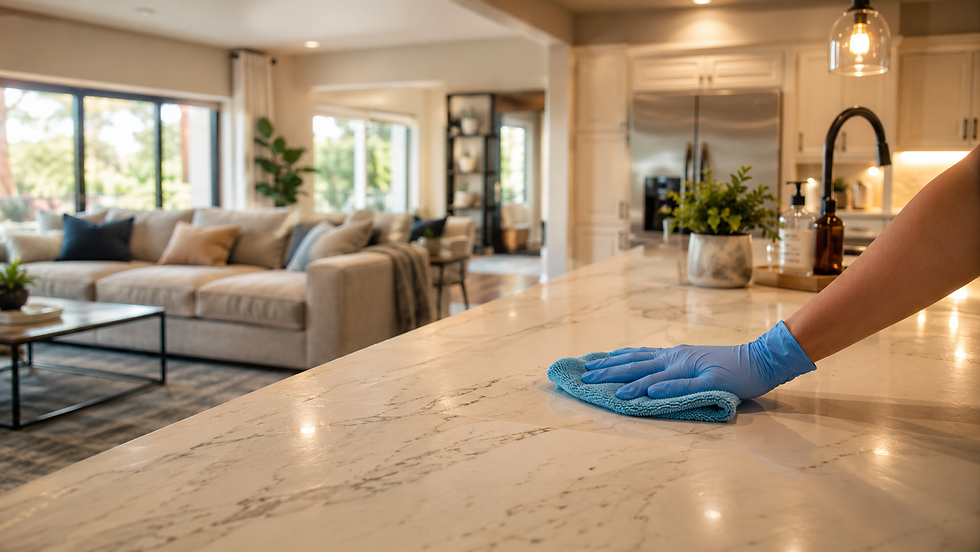
Kitchen
The kitchen is often the first room that makes a home feel dirty.
Focus on:
Countertops
Sink
Appliance fronts
Cabinet handles
Trash area
Five minutes of daily maintenance can prevent major buildup.
Bathrooms
A quick wipe-down of:
Sink surfaces
Faucets
Mirrors
can dramatically improve appearance between deeper cleanings.
Floors
Floors collect dirt, dust, and pet hair quickly.
Instead of attempting to clean every room daily, focus on high-traffic areas such as:
Entryways
Hallways
Kitchens
Living rooms
The Hidden Areas Homeowners Forget
Some of the dirtiest areas in a home are also the easiest to overlook.
Common examples include:
Light switches
Door handles
Remote controls
Refrigerator handles
Cabinet pulls
Stair railings
These high-touch surfaces collect oils, fingerprints, and bacteria throughout the day.
Adding them to your weekly cleaning routine can make a noticeable difference.
Create a Weekly Maintenance Schedule
A simple schedule is often more effective than occasional deep cleaning.
Monday
Vacuum high-traffic areas
Tuesday
Clean bathrooms
Wednesday
Dust surfaces
Thursday
Kitchen maintenance
Friday
Mop hard floors
Weekend
Laundry, bedding, and any needed touch-ups
By spreading tasks throughout the week, cleaning becomes more manageable and less overwhelming.
Don't Chase Perfection
One of the biggest reasons homeowners feel frustrated is unrealistic expectations.
A lived-in home will never stay perfectly clean.
Children, pets, visitors, cooking, and everyday life all contribute to ongoing messes.
The goal isn't perfection.
The goal is maintaining a healthy, comfortable, welcoming environment.
Professional cleaners understand that cleaning is a process, not a finish line.
When homeowners shift their mindset from "getting everything done" to "staying ahead of buildup," cleaning becomes far less stressful.
Final Takeaway
If your home never feels clean, the solution may not be more cleaning.
It may be smarter cleaning.
Focus on maintenance rather than marathon cleaning sessions. Prioritize high-impact areas, clean in the correct order, address high-touch surfaces regularly, and create a manageable weekly routine.
A consistently clean home is rarely the result of spending entire weekends cleaning.
It's usually the result of small, intentional habits repeated throughout the week.


Comments