
Why Your Home Always Feels Behind on Cleaning (and How to Finally Get Ahead Without Burnout)
- Clean and Fresh
- Jun 1
- 3 min read
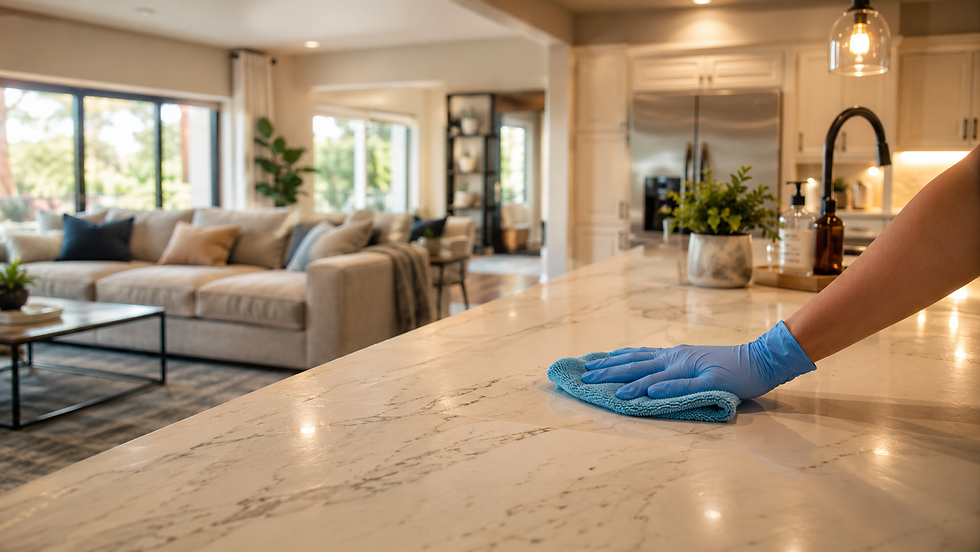
Keeping a home clean isn’t usually about big messes anymore. For most homeowners, the real problem is something quieter and more frustrating: the feeling that the house is never fully caught up.
Not dirty enough to panic. Not clean enough to relax.
That in-between state is where most people get stuck.
The good news is this isn’t a discipline problem. It’s a system problem—and once you understand what’s actually happening in your home’s “cleaning cycle,” it becomes much easier to fix.
The Real Reason Homes Feel “Always Behind”
Modern homes accumulate mess in layers, not events.
Instead of one big cleaning task, you’re dealing with:
daily surface clutter (dishes, mail, clothes)
invisible buildup (dust, grease, soap residue)
weekly accumulation (bathrooms, floors, laundry cycles)
forgotten zones (baseboards, vents, blinds)
The issue isn’t effort—it’s that each layer reappears at a different speed.
So even when you clean, something else is already building again.
That creates the feeling of never being done.
The “Hidden Cleaning List” Most Homes Ignore
One of the biggest frustrations homeowners talk about is discovering how much they weren’t cleaning in the first place.
These are the most commonly neglected areas:
1. Baseboards and edges
Dust collects slowly and makes entire rooms feel dull even when they’re tidy.
2. Bathroom buildup zones
Behind faucets, around drains, and grout lines often go unnoticed until they discolor.
3. Air movement areas
Ceiling fans and vents quietly spread dust around the home.
4. Appliance touchpoints
Refrigerator handles, microwave buttons, and stove knobs collect grease daily.
5. “Under and behind” zones
Furniture, beds, and appliances hide long-term dust accumulation.
Once these areas build up, the whole home feels harder to maintain.
Why Deep Cleaning Doesn’t Solve the Problem Long-Term
A common approach is to wait until things feel overwhelming, then do a full “deep clean.”
It works temporarily—but the cycle returns quickly because:
daily maintenance habits aren’t changed
hidden buildup areas aren’t tracked regularly
cleaning is reactive instead of scheduled
Deep cleaning resets the home.
Maintenance keeps it stable.
Without maintenance, every deep clean becomes a reset button instead of a solution.
A Better System: The “Low-Pressure Rotation Method”
Instead of trying to clean everything at once, divide your home into rotating focus zones.
Weekly structure example:
Day 1: Bathrooms (10–15 minutes each)
sink + counters
toilet exterior
quick mirror wipe
Day 2: Kitchen reset
counters
appliance fronts
sink rinse + wipe
Day 3: Floors + visible dust
vacuum or sweep main areas
quick dusting of surfaces
Day 4: Laundry + soft reset
bedding
towels
light declutter
Weekend: Optional catch-up
only what was missed, not everything
The goal is not perfection. It’s preventing buildup from compounding.
The Mindset Shift That Changes Everything
Most homeowners think:
“I need a full day to clean properly.”
But the more effective mindset is:
“I need to stop things from accumulating faster than I reset them.”
That shift reduces overwhelm immediately.
Because now cleaning isn’t a giant task—it’s a manageable rhythm.
When Hiring a Cleaning Service Actually Makes Sense
A local cleaning service isn’t just for “special occasions” or luxury homes.
It becomes practical when:
maintenance cleaning consistently falls behind
weekends are spent catching up instead of resting
deep cleaning is happening too often
stress builds around unexpected guests
certain tasks never get done (baseboards, bathrooms, floors)
A good service doesn’t replace your habits.
It resets your baseline so your routine actually works again.
Final Thought
A home doesn’t need to be perfect.
It needs to be manageable.
Once cleaning becomes a steady rhythm instead of a recovery project, the entire experience of living in your home changes—less stress, less catching up, more actual living.


Comments